
Blog
The Secret Life of Your Garden in Winter
Nov
As November settles into Maryland, the leaves are falling, the temperatures are dropping, and our gardens are preparing for their winter rest.
But here’s a little gardening secret: Your garden isn’t nearly as quiet as it looks!
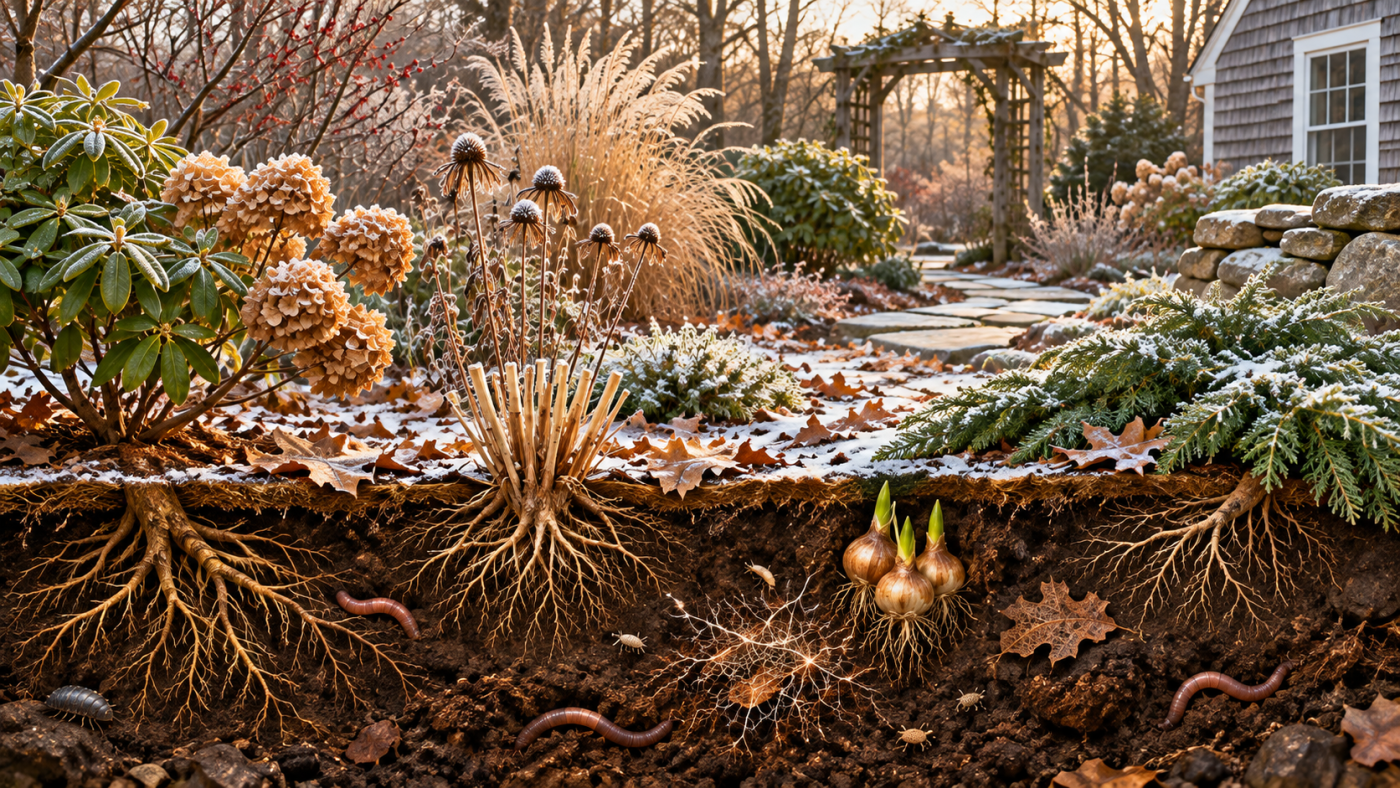
While the flowers have faded and the trees have shed their leaves, an incredible world of activity is taking place beneath the soil. From hardworking roots to tiny beneficial insects, nature is busy preparing for another beautiful growing season.
Let’s discover what’s really happening in your garden during winter!
1. Plant Roots Are Still Alive Underground
Just because a plant has stopped growing above ground doesn’t mean everything below the surface has stopped, too!
Many trees, shrubs, and perennials can continue limited root growth while soil temperatures remain favorable.
Here in northern Maryland, the ground may stay unfrozen well after the first frosty mornings, allowing roots to remain active even as plants enter dormancy.
Healthy root systems are essential for supporting new growth when spring arrives.
As temperatures drop further, root activity slows considerably. Plants conserve their energy and wait for warmer conditions to return.
2. Tiny Organisms Are Keeping Your Soil Healthy
Your garden soil is home to an incredible community of living organisms!
Beneficial bacteria, fungi, earthworms, and other small creatures help break down organic materials and recycle nutrients.
Even in winter, your soil is a living ecosystem.
Much of this activity slows during freezing weather, but some microorganisms remain active whenever temperature and moisture conditions allow.
As fallen leaves and other organic materials gradually decompose, they contribute to healthier soil for future plant growth.
These tiny garden helpers may be out of sight, but their work makes a big difference!
3. Beneficial Insects Have Secret Winter Hideouts
Ever wonder where butterflies, bees, lady beetles, and other beneficial insects go when temperatures drop?
You might be surprised to learn that many spend winter right in your own backyard!
Depending on the species, insects may overwinter:
- Beneath fallen leaves and mulch.
- Inside hollow plant stems.
- Under loose tree bark.
- In underground burrows.
- Among dried grasses and perennial plants.
Some survive winter as adults, while others remain as eggs, larvae, or pupae.
That’s one excellent reason to leave a few garden beds a little less tidy!
Providing natural winter shelter helps beneficial insects survive and return to support your garden next season.
4. Fallen Leaves Are Nature’s Winter Blanket
Those beautiful autumn leaves do more than decorate your lawn!
A layer of healthy fallen leaves can help insulate the soil, conserve moisture, and provide shelter for beneficial organisms.
As leaves gradually decompose, they return organic matter to the ground, improving soil structure over time.
Instead of removing every leaf, consider leaving some in garden beds or beneath shrubs.
Just remember to clear thick, matted leaves from lawns so they don’t smother the grass, and remove diseased plant material where necessary.
A little natural garden cleanup can be a very good thing!
5. Spring Flowers Are Already Getting Ready
Here’s something especially exciting!
Some of next spring’s most beautiful flowers are already preparing for their big debut underground.
Spring-flowering bulbs planted in fall begin developing roots before winter, then use the cold season as part of their natural growth cycle.
Two particularly beautiful choices are:
Mount Everest Allium
This striking ornamental onion produces tall stems topped with large, snow-white globes of flowers in late spring to early summer. Its dramatic height and elegant appearance make it a wonderful addition to sunny garden borders.
Advance Crocus
One of the early signs of spring, Advance Crocus produces delicate golden-yellow flowers with soft purple-bronze shading on the outside. These charming little blooms look beautiful planted in clusters along walkways or near garden beds.
Both prefer well-drained soil and can be planted in fall before the ground freezes, provided conditions are suitable.
And here’s the exciting part: White House Nursery still has plenty of interesting bulb choices, including Mount Everest Allium and Advance Crocus!
A little planting now can create something wonderful to look forward to next spring.
How Can You Support Your Winter Garden?
Helping all this hidden activity doesn’t have to be complicated!
Leave Some Leaves: Allow healthy fallen leaves to remain in garden beds where appropriate.
Keep Some Stems Standing: Dried perennials can provide valuable shelter for overwintering insects.
Protect the Soil: Organic mulch helps moderate soil temperatures and conserve moisture.
Avoid Unnecessary Digging: Disturbing garden beds during winter can disrupt soil structure and overwintering wildlife.
Water When Needed: Newly planted trees, shrubs, and evergreens may still need water during dry weather before the ground freezes.
Sometimes the best thing you can do for your garden is simply let nature do its thing!
Your Garden Is Never Really Asleep!
Winter may seem like the quietest season, but beneath the surface, nature is doing some amazing work.
From roots conserving energy to beneficial insects finding shelter and spring bulbs preparing to bloom, your garden is filled with hidden life and future possibilities.
Want to give your garden a beautiful head start on spring?
Stop by White House Nursery in Upperco, MD! Explore our remaining selection of spring-flowering bulbs, including beautiful Mount Everest Allium and Advance Crocus, and let our friendly team help you prepare your landscape for the seasons ahead.
Because even when your garden looks like it’s sleeping, something wonderful is happening beneath the surface!
